Those Who Are Gone
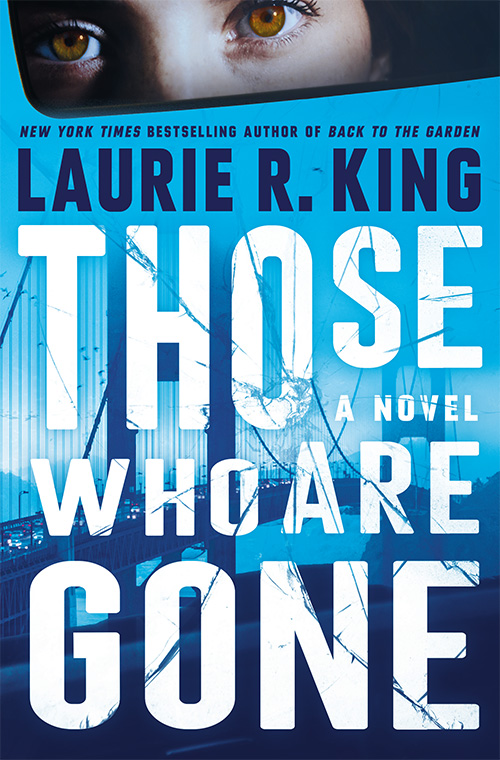 Buy the Book:
 Bookshop Santa Cruz (Signed)
Poisoned Pen Books
Bookshop.org
Barnes & Noble
Amazon
Audible
Libro.FM
Recorded Books
Series: Raquel Laing #2
Published by: Bantam Books
Release Date: Sept. 8, 2026
Overview
Inspector Raquel Laing of the San Francisco Police Department and Cold Case Inspector Al Hawkin (from the Kate Martinelli stories) have a way of finding cold cases of the past that heat up in the present.
SFPD Homicide Inspector Raquel Laing had what might politely be termed a “difficult childhood,” until she was taken in by a loving family at the age of nine. She still lives with her adoptive sister, Dee, an online investigator for organizations all over the world.
Trouble arrives with an all-too-common case for Inspector Laing: the homicide of a drug dealer in a deserted corner of San Francisco. But the everyday rapidly spirals into complications—just as a simple search into the family’s ancestry is throwing Dee into her own world of turmoil.
Raquel’s case blows up far too close to home, thanks in part to the illicit shortcuts she took in the investigation, and while her unique skills are too valuable for the SFPD to suspend her entirely, she is removed from Homicide and put onto the Cold Case Unit.
On the one hand, Cold Case lets her work with her friend and mentor, Al Hawkin. On the other, it leaves her free to look at some disturbing facts about her past—and at the devastating news that Dee has uncovered in her own search for the truth.
Cold cases heat up, the distant past intrudes, and two sisters begin to suspect that they are tied together in ways they never imagined—ways that threaten attention from a powerful and vicious international cartel.
A case proving that those who are gone remain tied to those who are very much still here.
Discussion Guide
Download the Those Who Are Gone reading group guide
Excerpt
Prologue
NOW
Him
In my business, a man lives or dies by his word. Literally lives or dies. I say, “This is what I will do”—and that is what I must do. No hesitation. No failure. To hesitate is to die. If too many days pass between promise and act, other predators smell weakness.
Only prey is weak.
I was a boy dressed in his brother’s cast-offs when my class read a book about a puma and a deer, and I decided on that day that I would not be the prey in my life’s story. I am a man now, who uses a predator’s tools—sharp senses and sharper teeth, patience and speed, intelligence and a grasp of camouflage. I survived when so many did not, and I now move among the world’s most powerful men, getting them to do my bidding.
I am known as a man who makes good his promises, and carries out his threats.
One promise alone has eluded me, over the years. One failure that, if it had been more closely related to business—my primary business—would have destroyed me before I began. Although it did teach me a valuable lesson: women are dangerous. Their innocence is a trap.
That one small, personal mistake nonetheless spilled over, brushing me with the stink of failure and forcing me to spend the next two years being as bloody and brutal as I could, to take back my reputation and my authority.
One long-ago failure, at a young age and ruthlessly dealt with, nonetheless took years to stamp out entirely. But weakness has never been an option, and fear is the most powerful weapon of all.
I kill when an enemy forces me to. When a man—and rarely, a woman—defies me, lacking all common sense, ignoring the rise of hair on his scalp and the pound of blood in his veins. Somehow these deluded souls imagine that standing up to someone like me is even possible.
My response is as fast, as harsh, and as public as it needs to be. Sometimes it is limited to the challenger himself. Other times I have to bring his family or friends into the matter.
No hesitation. No weakness. It is the only way to do business.
When I was young, the reputation I got from that brutal early response stood like a granite foundation, and I built on that. As the years went by, my one mistake faded from memory, a single, early, unkept promise that was buried along with my would-be competitors.
I thought I was safe from a generation of younger, hungrier men.
I thought my early reaction, fast and powerful and harsh, had solved the problem.
Only recently have I learned that it did not.
So now it is time to keep that one promise, at last.
Chapter One
NOW
The two women sat across from each other at the old kitchen table, looking down at the gold star. Seven gleaming points around blue enamel words. inspector, it said. s. f. police. The badge was remarkably unblemished, all things considered.
“So, they talked you back in.” There was not a lot of enthusiasm in Dee’s voice.
“Looks like.” There was even less in Raquel’s. “Consulting at first. Active duty later.”
“I thought the Department didn’t hire consultants.”
“Contractor, then. Like you. They hire contractors if there’s good reason.”
“And you’re a good reason.”
“I guess? And we could use the salary.”
“Oh, for God’s sake, Rock, do you have any idea how many jobs I turn down? You could earn multiples of what the Department pays and still have time to get your own business going.”
“I know. But . . .”
“But?”
“Dee, I’ve begun to suspect that going private would require more . . . people skills than I’m comfortable with.”
“So let someone else be your public face. What about Jen? She’d be great.”
“You think I should ask a woman I’ve known less than three months to quit a job she loves and come run a nonexistent private investigation business? Anyway, the Department would give me full benefits.”
“Health insurance will be a great comfort the next time some idiot shoots you.”
“Dee, come on, that was—”
“My fault as much as yours. More, maybe.” Dee had claimed guilt a dozen times since things blew up eight months ago, and a dozen times Raquel had rejected the claim. It was an argument they were both tired of.
Raquel picked up the badge, rubbing her thumb across the raised number at the center. Her number. The same gold star she’d been given on promotion to Homicide, six years before. The Department had also given her back her sidearm—and she felt even more ambivalent about that.
“So, when do you start ‘consulting’?” Dee asked.
Raquel put the badge down, unconsciously adjusting it so the embossed number ran parallel to the table’s edge.
“Probably next week. But I want to pass the agility run before I go back into active duty. The doctor said he’d sign off on me, but I think I should prove that I can handle the physical demands.”
“Prove to whom?”
“Anyone who’s going to risk partnering with me. I’ll set up a practice physical next week.”
“I still think it’s ridiculous that someone your size takes the same test as a six-foot-four man. You’re not much taller than the wall you have to climb over.”
“And a six-four man has a handicap when it comes to sit-ups and push-ups, so the scores balance out.”
“You think your leg will do it?”
“I haven’t used the cane in a week.” She picked up a wooden pro-motional token from the little grocery coop—Rory must have brought some shopping by—and started fiddling with it, walking it up and down the backs of her fingers.
Being focused on the token, she did not see her sister’s raised eyebrow, but she could imagine Dee’s unvoiced remark—something along the line of: Maybe so, but you’re still limping. But all Dee said was, “Until then, you’ll be working with Al again?”
“I’m going to suggest that I do both. I’ll be available to the Homicide Detail, though at first mostly working with Al.”
Al Hawkin, renowned for having the best clearance rate of the SFPD Homicide Detail, had been Raquel’s mentor since her rookie days. Semi-retirement had moved Al from active duty into the Cold Case Unit—where he continued to rack up clearances, but where the budget would not cover Raquel going full-time. She had spent the last few months working Cold Case, during a leave that was only partly medical, but now that she had been cleared of wrongdoing—or, she suspected, now that Al had convinced their superiors that Inspector Laing had learned her lesson and that any sins she might have committed were more than offset by her unique investigative skills—she was looking at being on the active roster again.
With mixed feelings.
She liked working alone. She’d found it a relief, not having to consider every minor interaction with colleagues, being away from the noise and distraction of the station, coming back to find things on her desk precisely where she’d left them. Not having to explain her every move to people who seemed to enjoy being either ignorant or blind. She did best when she was working alone, at her own speed, without having to second-guess herself or wait for colleagues to catch up. And she enjoyed the freedom—no, admit it: she relished setting her own hours and making up her own rules. Going private offered the thrill of the chase unimpeded by the endless rules of search and seizure, Miranda rights, and the ever-looming presence of Internal Affairs.
All of that she’d enjoyed, working with Dee. But in the weeks since the Gardener case had ended, when she’d handed over that badge on the table and the SIG Sauer that went with it, she’d reluctantly become aware that she didn’t really like working for Dee. Her sister’s investigations were either international and far-flung—ironic, for a woman who never left the house—or they were local and tedious beyond belief. She found it depressing, the number of millionaires eager to throw money at someone with Dee’s reputation for a simple case of corporate spying or a cheating wife. Like hiring a neurosurgeon to bandage a playground scrape. And if Raquel went through with her PI license, that would be the scope of her daily business.
When it came to homicide, the closest a licensed PI could get to an active investigation was as some kind of support staff. But homicide, as the past weeks with Dee had driven home, was the crime, the only one that really mattered. Solving murders was, simply speaking, a job worthy of Raquel Laing’s abilities. A failed murder investigation, allowed to go cold and unsolved, was a nagging blot on the face of justice.
She put down the token, its words in parallel to the numbers on the badge, and looked at her sister—then frowned.
“Are you okay?”
“I’m fine,” Dee said. “Why? Do I look sick?”
“You look pale. Distracted.”
“My mind’s on that thing in Ukraine I’ve been working on. And I always look pale.”
“You didn’t when we first met.”
Dee gave a cough of laughter. “Rock, when we first met, I was a teenager who ran track every afternoon. I was as brown as a farmworker.”
“You need vitamin D. You should spend more time in the garden.”
“If it makes you happy, I’ll take my lunch outside.” Dee’s brain allowed her to interpret the house’s fenced back garden as safely “in,” while the street outside, even the front steps, were threateningly “out.”
“Thank you. And pull some weeds while you’re out there.”
“Ah. So, self-interest rather than sympathy.”
“You know me, Dee. I’m all about the hidden motives.”
Chapter Two
NOW
Starting that week, Raquel quietly set aside the private investigator idea and concentrated on what her life was, rather than what it might be.
Weekday mornings she spent with Al, mostly following up on cases that their recent Gardener Estate investigation had brought to light, related to the 1970s serial killer known as The Highwayman. Weekday afternoons found her at her desk with the Homicide Division, waiting for someone to ask for help—which mostly meant working on something of her own while the others got on with their jobs. Lunch hours and after work each afternoon, she doubled down on her physical recovery.
She’d done a lot of therapy on her leg since the last surgery in December, enough to get her back to brisk walking, slow jogging, and even climbing stairs. But for an active cop, the bar was somewhat higher. Raquel had never been much interested in fitness, but strength and endurance let the mind carry out its decisions. While some people might exercise for the joy of exertion, Raquel’s goal that summer would be to check milestones off the list: Dump the cane? Check. Walk without a limp? Check. (In the mornings, at least, before she got tired.) Heavier weights, harder stretches, more flexibility? Three checks. A jog that looked more like a run than a zombie shamble? Check. Sort of. And she found it a great motivator to work with a large, brusque, hypermasculine physical therapist with a very vocal scorn for female weakness.
Weekends she spent with Jen.
Jen Bachus was new, and unexpected. Raquel’s relationships tended to be energetic, shallow, and short-lived, but she already suspected the same would not apply to Jen. She wasn’t sure what to do about that. The two had met in April when the Gardener cold-case murder grew dangerous teeth, and by the time she’d realized that it might be wrong to bring a cheerful innocent like Jen into a life with some very dark corners, it proved too late to back out. Jen was the manager of the Gardener Estate, half an hour’s drive down the Peninsula if there was no traffic—and there was always traffic. It was actually something of a relief that Jen’s job enforced the distance between them. If it hadn’t, Raquel suspected that she’d have been expected to clear some drawers for Jen’s things, but so far, any thought of moving in together had remained unvoiced, and they alternated weekends between the house in San Francisco and Jen’s apartment in Redwood City. Dee liked Jen. Jen adored Dee, and claimed she was fine with the situation—that absence made the hearts, etcetera.
Raquel wasn’t sure she believed her.
In fact, Jen Bachus was one of the rare people that Raquel couldn’t read like a book. The other unreadable ones usually turned out to be psychopaths, to some degree, but Jen was one of the most balanced, humane, empathetic people she’d ever met.
Which might have explained the problem.
The weekend after Raquel started back at the SFPD was a San Francisco weekend: Jen came Friday, they went to the farmer’s market on Saturday morning and Chinatown in the afternoon, went for two jogs (zombie shuffles) that Jen embraced with enthusiasm, and spent a lazy Sunday cooking brunch and pottering in the backyard (which was also looking better under Jen’s influence). She and Raquel cooked dinner and took a final brief stroll, then she packed her bag with the work she hadn’t done and the novel she hadn’t opened and said goodbye to Dee and Cat. Raquel walked her to her car, gave her a kiss, then went back to the house, barely needing the handrail to manage the steps up.
Dee was making a pot of coffee in the kitchen—regular, not decaf, Raquel noticed.
“You have a night of it?”
“I need to catch someone in Kyiv when they get to work Monday. I won’t be that late. It was good to see Jen. She’s looking well.”
“She claims she actually likes having separate lives during the week.”
Dee gave her a sideways glance. “You think she’s just fooling herself?”
“I think she may be having to rearrange her expectations.”
“Have you asked?”
“More or less.”
“Which means no.”
“Which means I talked around it in a way that would normally give me an answer, but . . . I find it oddly difficult to know what she’s thinking.”
“That’s quite an admission.”
Raquel gave her sister a wry smile. “An irony, I know, considering that’s what I do. And I’m pretty sure it’s not because Jen has a manipulative antisocial personality disorder.”
“Maybe it’s the opposite problem? That you have trouble seeing into Jen’s secret motives because she doesn’t have any?”
“You’re suggesting I see her as more complicated than she is?”
“I’m suggesting that cops have a tendency to look for the worst in people.”
Raquel thought for a moment, then shrugged. “Whatever it is, I hope Al doesn’t find out. My being able to see behind masks is the only reason he keeps me around.”
“Not the only reason.”
“Al, maybe. But the lieutenant didn’t allow himself to be talked into keeping me around because he thinks I’m charming.”
“Or maybe,” Dee said, going back to the previous topic, “you’re not pulling apart Jen’s every interaction because you’re enjoying the sense of spontaneity. Or even because you’re dimly aware that in a relationship, the other person might need a degree of privacy.”
Raquel thought about it for a moment. “You think I could be that sensitive?”
Her question was serious, but Dee laughed so hard, her coffee sloshed out over the table.
Raquel grabbed the sponge and watched her sister wipe the worn wooden surface. “You haven’t been laughing,” she said suddenly. “Dee, I haven’t heard you laugh in . . . oh, the better part of a week. And don’t tell me it’s because of the Ukraine investigation. Jokes are your way of balancing the dark shit.”
“Oh, it is the work—partly, anyway. But yeah, you’re right, I guess I’ve been preoccupied. It’s… I’ve been trying to decide. Whether or not I should get in touch with some of those names I got from that ancestry site last year. The people it says are my…family.”
Chapter Three
THEN
The whole thing had started ten months ago, halfway through the previous September, with an unexpected conversation.
Raquel was at the stove, stirring bits of spiced chicken in a time-blackened wok older than she was. Dee sat at the old wooden table with a glass of wine and her iPad. Cat—mostly Siamese and smug about it—had stretched along the cushions at Dee’s back in the hopes of sunlight, although the evening’s fog, lingering this year past true summer, was causing it to press up against Dee’s back instead.
Raquel was tinkering with a new recipe, trying to balance the heat of the peppers and the tang of capers. She enjoyed cooking, although she wasn’t sure why. It should have felt like a waste of time to spend an hour or more assembling a meal that disappeared in minutes, but for some reason, she found the rituals satisfying. Science and art, precise rules enlivened by informed experimentation. She’d once made the mistake of musing about it to Dee, who replied that she thought it offered Raquel a degree of emotional and sensual engagement, but at a remove: on the surface, you were simply producing food; underneath, you were nurturing others and offering them pleasure. But when Dee had then gone on to suggest that it evoked the happy times when Mom or Dad cooked and the house was warm and safe, Raquel had changed the subject. She took care not to bring it up again.
It was enough that standing at the stove cooking dinner helped separate her home life from her job, an endless reminder of all the grim ways the residents of San Francisco could come up with to kill each other. Although as it happened, that particular day had been relatively calm—no new homicides, not even a difficult autopsy. She was feeling about as calm and optimistic as she ever got.
She turned the chicken into a bowl, adjusted the gas, and swept chopped garlic into the pan.
She and Dee had been chatting about an upcoming wedding they’d both been invited to, with ridiculously formal hand-calligraphed invitations that included a “plus one” for each of them, which got Dee started on speculating whether she could send a “plus two” in her place, or if Raquel qualified for a “plus three” to make up for a missing sister-plus, and if maybe Raquel could ask Al Hawkin, or maybe sixty-year-old Bobby Kitagawa, to step in as a boyfriend, and Raquel’s assertion that she was off men after the last one but maybe she’d ask her new partner, Pam, instead, and things got so silly that she didn’t even notice that her sister was avoiding something until Dee abruptly cut her off.
“Hey, Rock? I’ve been thinking about doing one of those ancestry DNA tests.”
Raquel’s hand slowed as her brain poked around the edges of the statement: no, she hadn’t misheard. She turned to look at her sister, sitting on the padded seat beneath the window, frowning at her half-empty glass. A person didn’t need to be an expert in microexpression analysis to see the discomfort there.
Had Dee ever—ever—expressed a desire to know anything about the wider history of Emma and Tom Laing? No. Raquel had come into the Laing household when she was nine—Dee was fourteen at the time—but she knew she would remember such a radical proposal.
“Why?”
Dee intently studied the motion of the liquid in her glass. “Rory came over for lunch, and we were talking about one of her clients. She said something about the genetic component of anxiety disorders. It . . . got me to thinking.”
Ah.
Dee’s attitude, ever since the agoraphobia had closed in during her late twenties, was that she didn’t have a disorder: she simply never left the house. She was no hermit. She had more of a social life than Raquel did, and their house was always filled with friends, colleagues, and all manner of children. She even managed the occasional romantic fling—short-lived, generally, for obvious reasons. Everyone in her wide circle of friends had come to treat Dee’s quirk as a lifestyle choice, not a problem—including Rory Patel, Dee’s employee-turned-friend, who now worked with troubled adults and children every day.
So, why now?
“Would finding out that Mom and Dad had mad uncles in the woodwork make a difference to you?”
“Well, truly psychotic might be a bit alarming. But yeah, I thought it might be interesting to know.”
“And maybe learn something about the outer branches of the family tree?”
Dee lifted her gaze at last. “Would that be wrong?”
“Of course not. Although I always figured there had to be reasons why Mom and Dad wanted nothing to do with either family. I mean, we had plenty of people we called ‘aunt’ or ‘uncle,’ but even as a kid, I knew that ‘Grandma’ Ruthie wasn’t actually a relative.”
“Don’t you think it’s about time I try and find out a little more?”
For someone who based her career on reading the subtleties of human response, Raquel Laing was not actually very good with human emotion. She kept a mental What Would Al Do? list to help her interact with the public, based on her mentor’s easy, natural methods, but outside of the job, only painful experience had taught her to consider the position of others. That experience was now telling her loud and clear that this was not the time to say, Huh, I always figured Mom and Dad talked to you about that when I wasn’t around.
Because very clearly, they hadn’t.
And equally clearly, Dee was troubled by the knowledge.
It wasn’t that they weren’t wrapped in family, still, twenty years after Emma and Tom Laing had gone. The table Dee was sitting at was a curbside rescue Dad had laboriously carted home on his bicycle after the old one collapsed, that the four of them had scrubbed, sanded, and refinished. The glass that Dee was drinking from was the last survivor of a set the neighbor had given the Laings for an early wedding anniversary. The wok and the stove beneath it both dated from 1986, the year the Laings had come to San Francisco with their new baby, Dee. The fridge, the curtains, the coffeemaker, and Dee’s iPad were new, as was the cat stretched along the back of the window seat. The paint had also been redone in the years since the Laings had died, although the colors were virtually identical. Mom and Dad were still there, every day.
Which made the Laings’ silence . . . unexpected. Two people who created a warm and loving home, who talked to their daughters—both the born and the adopted—about everything, who had taken care to explain any white lie the girls had heard them deliver, yet they
had never discussed their respective families with Dee? Ever?
“I think,” Raquel said carefully, “that if you want to find out more about them, then you should. I mean, I personally couldn’t care less about my own blood relations, but this isn’t about me. Again, would it help you in some way, to find out if you had any relatives with anxiety disorders?”
“It might.”
Raquel looked at her sister across the room. Her sister, Dee, who knew her better than anyone. The person who had welcomed and comforted her the night she was brought to this house, and never stopped. A person she had lived, worked, and grieved with, so completely intertwined that their conversations did not always need to be voiced aloud.
Are you admitting that you have a problem? Raquel’s eyes asked.
Do I need to admit it? was Dee’s silent reply.
I thought you were happy.
Maybe I could be more so.
I don’t like to think of you being unhappy. I would have done something to help.
I am not unhappy. I am merely limited. And this may be the time to change that.
Dee, you are more than my sister. I will do anything for you.
I know.
“Then it sounds like a good idea,” Raquel said. “Make sure you choose a company with good privacy settings.”
Dee’s response, though again silent, was eloquent: Would someone in my line of business neglect security? But all she said was, “Of course. And I think your vegetables are burning.”
Dinner didn’t burn—quite. Dee entered her information and credit card number into the MyKin.com site, then closed the iPad and got up to set the table.
As Raquel spooned Jasmine rice and Turkish-Italian stir-fry onto two of the chipped stoneware plates (another bit of inherited life, made by a potter friend of their parents), she wondered how long her sister would have to wait for her answers. The test would say nothing about Raquel Laing herself, of course, but still, it was personal. Surprisingly so.
At least it wasn’t a police lab—that could take months. And it wasn’t as if the two of them didn’t have plenty to keep them busy.
Chapter Four
THEN
Inspector Raquel Laing’s busy life became even busier the next day, beginning well before dawn.
She was on call, and the work ring tone pulled her from a sound sleep. A homicide. A nasty one. Down near Hunters Point.
The body of a young, light-skinned Hispanic male was found at the edge of a decaying parking lot in a corner of San Francisco that had been enthusiastically slated for redevelopment, put on hold by Covid, and fallen into an economic void since then. The warehouse at the center of the lot, like most of the nearby buildings, had plywood sheets nailed over the windows. Most of the streetlights were either dark or flickering, stark contrast to the flashers and headlights of the half-dozen vehicles and the sharp, blue-white beams of the flashlights inside the wire fencing, caught up in swirls of fog.
The paramedics had been leaving when she drove up, and Patrol was beginning to set up the caution tape—precisely zero nosy civilians were pressing forward to see on this cold and foggy night, but the media would soon be there. At least someone had upended a paper bag over the post where a hand might have rested as they pushed through the gate. She gave her name to the officer in charge and ex-changed greetings with the ME’s men and the other two officers, one of whom told her that the ops center had called in CSI and the local fire station were coming by with their lights. She gave a sharp warning to the youngest officer, who had nearly stepped on a patch of blood, then stood watching the ME work, trying not to think about how much evidence had been trampled already.
The ME was in the process of bagging up things taken from the body, and Raquel asked one of the officers to shine his light over the license: Gilbert Gallegos, twenty-three years old, with a criminal record and an address two miles away in the Portola District. She studied the face on the license and decided that, though it was younger than the one at her feet, it was the same man.
Crime Scene started to arrive, pulling out equipment to measure, search, record, and book in the evidence. The Examiner’s men stood back, CSI spread out, the videographer’s light was added to the mix, and half an hour after Raquel got there, her partner pulled up just before the fire department grumbled in.
“Jesus,” Pam complained, brushing her off-white woolen coat. “I should have worn my black coat. God, it’s cold. Not sure what we can do out here until morning, I could have stayed in bed till breakfast.”
Her hair and makeup, Raquel noticed, were as perfect as ever.
Pam Fawcett was new to Homicide. Normally, she’d have been paired with one of the older-timers, but since Raquel’s partner had taken retirement about the time Pam came bouncing in, the lieutenant had assigned the newbie to Raquel.
Raquel had objected. The lieutenant assured her it was temporary. That was five weeks ago, and yesterday she’d overheard one of the others in the twelve-person Detail refer to her and Pam as “the girls.” She intended to speak with the lieutenant again about rearranging matters. Nothing to do with the woman’s expensive clothes, immaculate hair, or weekly two-hour manicures.
In the meantime, she decided to give “the girl” something to take her eager mind off futile complaints. “Do you see any security cameras?”
“I can’t see much of anything in this fog,” Pam said.
Raquel, on the other hand, could see entirely too much, even without the fire department’s lights: the way the blood had been smeared across a disturbingly long stretch of asphalt before Gilbert Gallegos drew up his legs in a fetal position and died. The harsh angle of the shoulders, pulled back by the silver tape on his wrists. The other patch of duct tape, just visible at the edge of his mouth—that, somehow, was the worst.
Drug deal gone bad? If so, why meet in the middle of a bare parking lot, with no place to run to if a patrol happened by? Victim and shooter had needed to slip in through the fence where the padlocked gate sagged on its hinges, then cross the forty feet or so to the parking lot’s single working overhead light.
“Hey guys,” she called. “Could you turn off your flashlights for a minute? I want to see how strong that overhead light is, before the fire department sets up their equipment.” Or the sun rose, whichever came first.
One by one, the flashlights clicked off, and although the lights on the various vehicles kept the darkness away, the building served to partially block them. One of the patrol officers made a joke about hearing the undead creeping up.
As her eyes adjusted, the patch of brightness grew clearer around the foot of the pole. It wasn’t enough for Crime Scene to work by, but plenty to show the curled-up victim and the semicircle of figures standing around him.
“Thank you,” she called. The lights went back on, and moments later, the firefighters finished their maneuvering and flooded the area with harsh light and black shadows. Everyone winced, but it meant they could get on with their jobs.
Raquel stood at the center of activity, looking up at the pale streetlamp. Had the body ended up at its base by accident, or was it staged?
If I came all the way out here to tie someone up and then shoot them, she thought, I’d have picked a dark corner, or stayed out in the street. It was not accidental: being able to see him was the point.
“Why don’t you go do a search for any doorbell cameras?” she said to Pam. “And keep an eye out for any evidence.”
Pam went silent—had she been talking?—and then gave a deep sigh to let Raquel know she was feeling put-upon. “Yeah, like I’m going to step on the brass. I’ll take some marker tags.”
She stalked away in her three-inch heels—her irritation suggesting that, yes, she had been talking—and fetched the red, 4-cell Maglite with her name engraved on it that her boyfriend had given her, then set off to shine it up and down the buildings and along the gutters. Raquel kept an eye on her partner’s progress for a minute, to make sure gung-ho new Inspector Fawcett didn’t try to open the door of that shiny orange Mustang with the WHOAMAN plates and the too-dark windows that was parked on the street like a diamond in a compost heap. Once Pam had walked past it, Raquel turned back to the body itself.
She didn’t think Pam was going to find any security cameras, not in this neighborhood. No more than they would come across a night watchman, or a busy road or homeless encampment conveniently overlooking the abandoned warehouse. Basically, if Raquel herself wanted to commit a murder, this is where she’d choose. Patrol only found the body at all because of an old woman two streets away who’d called 911 at 2:03 a.m. to report a pair of gunshots. The first had woken her. When she’d gone to the window to see which of the local kids was getting up to no good now, the flash of the second shot had told her where it was.
Nor did Raquel anticipate that Pam would need any markers for ejected cartridges lurking in the gutters. She could see enough of the victim’s wounds to know that the shooter had been up close—and if any brass had been kicked out in the middle of the flat parking lot, the flashlights would have caught it already.
She watched CSI work, thinking about the scene, letting the details flit around in her mind as they sought to come together. This did not feel like a grudge erupting between local toughs. It felt deliberate. Planned, either by an attacker strong enough to overcome a fit young man—the victim’s skin and clothes had been so scraped up by the pavement, as he’d inched along and left that blood trail behind him, they’d need the autopsy to show if he’d been in a fight—or there’d been more than one assailant: the gunman to control the victim, another to tape up his wrists and mouth.
She frowned.
Why the mouth? Why stifle your victim’s cries, but use a gun whose shots would wake up an old lady two blocks away?
And why the delay between the two shots?
The ME’s investigators were packing up, ready to take the body. CSI had finished their immediate search and moved away into the parking lot. Raquel walked toward the body, studying the marks on the ground, and dropped to her heels within touching distance of the victim, playing her flashlight over his face.
Good-looking, clean-shaven, the skin rubbed raw in places and embedded with dirt and gravel. Warmly dressed, in the casual clothing a man in his early twenties might choose. None of it was cheap—his shoes were the kind of pseudo-workman’s boots that cost two or three hundred dollars and he wore an expensive wristwatch, which for someone his age was a fashion statement, not a necessity.
Despite the dampness of the air, the trail of blood had lost its earlier liquid sheen, although the actual pool that had gathered under his body was still wet. Even with the lights, she would have to wait for daylight to be sure of the fine details of the victim’s motions, but it was plenty bright enough to show the general direction of the smears and scuffs. And—She rose and shifted to the side. “Did you catch this?” she asked over her shoulder.
One of the techs came over. “Where someone stepped into his blood? Yeah. You want closer pictures?”
She sounded a bit irritated at Homicide feeling the need to point out evidence to CSI, but Raquel was accustomed to being an irritant to her colleagues, and it was better than taking a chance.
“Please,” she said, and the videographer was summoned.
Pam, who had found no neighborhood security cameras, now wondered aloud about the Mustang at the curb. Raquel told her to talk to Crime Scene about it, and—considering the criminal record attached to their victim—asked her to start putting together their search warrant requests. Yes, by hand—Raquel had the team’s laptop in her car, but they had no way to print the forms.
Reporters had found them, and called questions across the caution tape. Neighbors roused by the noise and lights came to see, but so far nobody claimed to know anything. The sky began to grow light, the fire department took their equipment away, she talked to the lieutenant another couple of times.
Personnel drifted in, equipment was set up and taken away, the sun rose, the orange Mustang was loaded up and taken away. The ME ran the victim’s fingerprints, confirmed his identity, and did the family notification.
When it was full light, the video tech made another complete round of the area. He was friendly, experienced, and secure enough not to mind requests for close-ups and multiple angles.
Last night, she’d kept everyone well away from the long trail of blood and scuff marks, and made sure there was a lot of recording, both video and stills, both close up and from a distance. CSI would continue to work the scene for a few hours, but Homicide was nearly ready to move to the next stages.
First, though, Raquel wanted to put together her initial impressions of what had happened here.
Most apparent was, this young man had suffered. It was more than twenty feet between the first spray of blood, where he’d been hit center mass and fell to the ground, and the large final pool below the light. Raquel was no expert at mapping a crime scene, but her brain worked by seeing patterns, and here she could tell that her victim had been kneeling when he was shot, that he fell onto his left side, and that he’d tried hard either to get away from his shooter, or to reach the illusory sanctuary of the light spot under the pole.
Two slightly larger smears suggested he had paused twice along the way. To catch his breath, which the tape over his mouth would have limited? He had stayed mostly on his left side, but the scrapes on his face could indicate that he’d been trying to get the tape off, whether to scream for help or simply suck in more air.
How long? A minute, two? The old woman who called it in might be able to help, but it must have been an eternity for the victim.
And why the delay between the two shots? Surely it wasn’t from caution: even before the first bullet, the victim had been tied and unable to defend himself. Was the shooter squeamish? She’d have thought a hesitant killer more likely to stand well off and fire wildly in the direction of the downed man than walk up close for the kill shot.
The murder felt personal, profoundly so: a first shot to the body’s core, which would torture but not immediately kill. The killer had then stood by while the victim squirmed his way along, risking discovery while the young man’s body pumped blood onto the ground, his agony muffled by the tape across his mouth. And only when the trail of writhing was coming to an end did the shooter end matters with a precise second bullet in the victim’s exposed temple, from so near, he had stepped in the dying man’s blood. There would be gunshot residue in the victim’s scalp and blood spatter on the shooter’s sleeve.
Spurned lover? A vicious rival gang? A family feud grown lethal?
Or—appalling thought—San Francisco had bred another killer who took pleasure from a victim’s pain. Moreover, a killer who chose one of the City’s more isolated corners, who picked up any brass before leaving (unless he was old-school enough to use a revolver), and did not seem to have let drop any cigarette butts or incriminating bits of paper. He’d probably even had the sense to power off his cellphone so it didn’t ping a nearby tower.
Revenge or perversion, this had been a deliberate assassination, and Raquel’s bones told her that this one was going to be a slog.
Chapter Five
Then
When they had run the information on their victim’s license, they saw his record: dropped out of school at fourteen, a spell in juvie, and formally arrested twice since he had become an adult—most recently just three days ago, for selling cocaine to an undercover cop. Gallegos had made bail yesterday afternoon, and died less than twelve hours later.
They would need to search his home, his car, and his electronic devices. Matters were somewhat delayed by the number of addresses linked to his name—the Portola District one on his five-year-old driver’s license, another in Dolores Heights where the orange Mustang had been registered two months before, and between them, another two in the Mission District.
While Pam was working on the search warrant requests, Raquel phoned around for the name of whoever had bailed Gallegos out.
When she heard it, her eyebrows rose. Not a friend or long-suffering family member, but a lawyer—a very pricey one who, yes, did not scruple to represent drug sellers, but rarely someone so low on the hierarchy.
She didn’t bother to search out the phone number, for this was not a lawyer who would give any cop the time of day without being ordered to do so, preferably by a court of appeals. Or by an investigator playing on the blatantly suspicious time between his client’s freedom and the young man’s death. Although the lawyer’s willingness to cooperate would rest heavily on who was actually paying his bills.
The ME’s office had notified the victim’s next of kin, his mother, earlier that morning. Raquel now phoned the woman, to set up a time to meet. She heard the accent and started off in Spanish, but Mrs. Gallegos persisted in English, so she shifted back. They arranged to meet at the Gallegos house, the Portola address on Gilbert’s driver’s license. She and Pam got there a little after two in the afternoon.
When they parked across the street from the house, Pam looked at the place in surprise: tidy, fresh paint, large but nothing fancy. “That doesn’t look like a coke seller’s house.”
“His string of more recent addresses say that it’s not.”
“I meant the house he grew up in. And he was living here on his first arrests.”
Raquel didn’t answer, but it was true: on a crime map of the City, Portola would show as a low-crime island. As they got out of the car, she glanced at the handbag slung over Pam’s shoulder, and wondered if she ought to suggest that they lock it in the trunk. It had the kind of illegible logo on it that meant a high price tag, and combined with Pam’s still-perfect hair and nails, it made for a jarring note. Would you want the cop investigating your son’s death to walk in carrying that purse? What would Al do?
Al would point out that the grieving family probably wouldn’t care what the investigators wore, so long as they did their job.
Their interview with Mrs. Gallegos went as well as could be expected from a red-eyed mother surrounded by her distraught family: two brothers, two daughters, and a son three years older than Gilbert. The purpose of this initial contact was to introduce themselves, to offer condolences, and to assure the family that the SFPD was on the job. Raquel did not expect much firm information from this initial meeting, and went through the ritual of explanation, reassurance, and suggestions about everything from how to handle the media to when the body might be claimed for the funeral. She gave her card to every adult present, she offered her hand and repeated her condolences, and she left knowing that while Inspector Raquel Laing was not the most empathetic cop in the SFPD, she was an experienced one, and had done a decent job of representing the Department to a family going through one of the worst days of their lives.
However, she was leaving with actual information. Not the least of which was a recognition that, to some extent, Pam had been right: the people in that house did not look like a family that had given rise to a two-bit drug seller like Gilbert Gallegos.
And only one of the daughters had taken any notice of Pam’s purse.
Pam waited until they were in the car before erupting. “Jesus, how’d a low-life like our vic crawl out of a place like that? A professor, a doctor, a software programmer—where’d he come from?”
“You think drug sellers all come from families of drug sellers?” Raquel had not intended to use such a hard tone, and it took Pam aback.
“’Course not. But it’s just . . . well.”
She subsided, having no idea why her senior partner had snapped at her. But at least her silence kept Raquel from having to go farther into a debate about inheritance.
Because if birthright was all, what did that say about Raquel Laing?
The other piece of information the family had given them was that, yes, although Gilbert had lived in the Mission District for a few years, his current address was the one on the registration of the flamboyant orange car: in Dolores Heights, up the road—and up the economic ladder—from the Mission. Which was a relief, since they’d sent the DA a warrant request with that address and it meant that, with his approval, they could take it to the judge with no further delay.
Warrant approved and CSI informed, they drove to Dolores Heights and found the Gallegos home a match for his car, showy and new. The manager responded eventually to a fist on the door. He’d obviously been asleep, and grumbled that he’d been disturbed in the early hours by the officer sent to secure the door. Raquel gave him a brusque apology and asked about his tenant. Gallegos, it appeared, had only moved in two months ago, and the next time some kid without a 1099 wanted a place, the manager was going to shut the door on him.
Raquel thought about asking how much he’d taken for short-cutting the agency’s requirements, but decided to save it for later.
The elevator took them smoothly to the sixth floor, where an extremely bored uniform yawned at the door and an unruly heap of equipment in the hallway betrayed the presence of the Crime Scene team. They sent him home and let themselves into an apartment already filled with busy people.
The walls were basic white, the carpeting thick, and the garish furniture so new, the air smelled of volatile compounds. One of the techs going through a cardboard box full of papers gave Raquel a nod. One of his partners stuck her head out of a doorway, said hi, and said they might want to come in.
It was the bedroom, rumpled covers pulled back to reveal maroon silk sheets, the door to the closet standing open while a CSI went through the garments, quite a few of which still had tags on them. Someone was grumbling in the adjoining bathroom, but the centerpiece of the room was a beat-up folding card table in one corner, where Gallegos had been repackaging the contents of a single brick of what would later prove to be fentanyl-laced cocaine—using a now-empty box of ziplock sandwich bags and a teaspoon from the barely-used set in his kitchen.
Bemused, Raquel stood next to the woman, who she’d worked with a number of times before, and studied the setup.
“You ever seen anything like this?” she asked.
“Once. A middle-school kid had found his uncle’s supply and liberated some to sell to his friends. That was only pot, but the ziplock bags were the same.”
No scales, no funnels, no tiny bags, not even a simple surgical mask to keep from breathing in a fatal dose.
“Not exactly a pro at this, is he?” Pam commented.
“‘Honest, man, it just fell off a truck.’”
“And stealing from the boss is never a great idea,” Raquel agreed.
“Ah, right,” Pam said. “You think he died before he told them where he’d put their stuff?”
Raquel gave her a look. “With his mouth taped shut?”
“Yeah, I guess not. So, exterminating the rats.”
Except that the Gallegos murder was not simply an execution. Yes, chances were that the killer was whoever Gallegos had stolen the cocaine from—but it had also been deeply personal. Which meant someone was very, very angry, either because he’d expected loyalty from the young man, or because the theft had put him under threat from the next person up the chain.
But if the killer felt himself in danger from above, why not make an effort to retrieve the drugs? Nearly three-quarters of the original package still lay on the card table, plenty to placate an unhappy boss. He wouldn’t have even needed to come after them himself, just scare the hell out of Gallegos and make him bring them.
It was almost as if the killer was more interested in punishing the young man than he was in getting his coke back.
There’s something I’m not seeing, the niggling voice in the back of her mind told her.
Well, the end of the thread would appear sooner or later.